
 Image 1 of 5
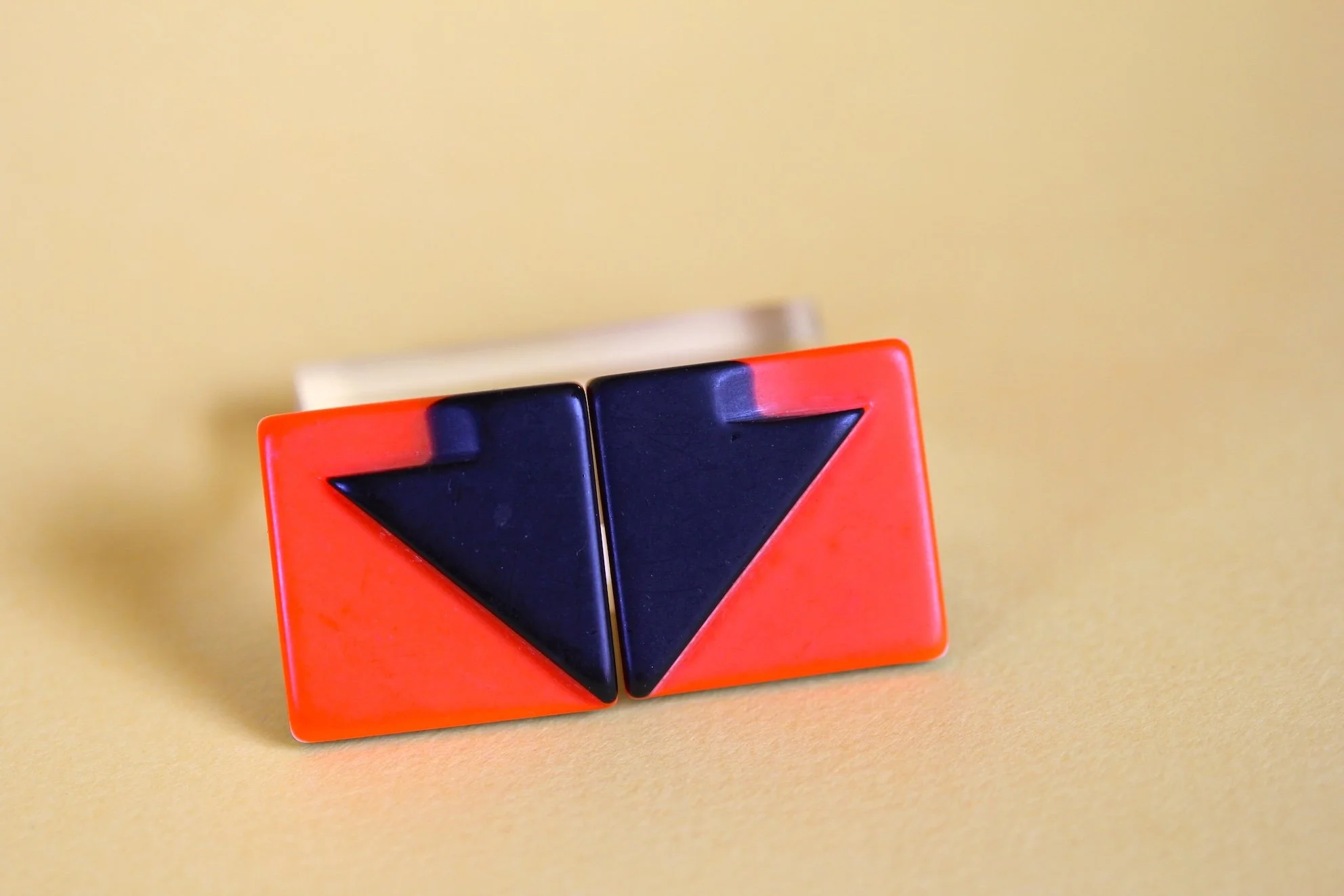 Image 2 of 5
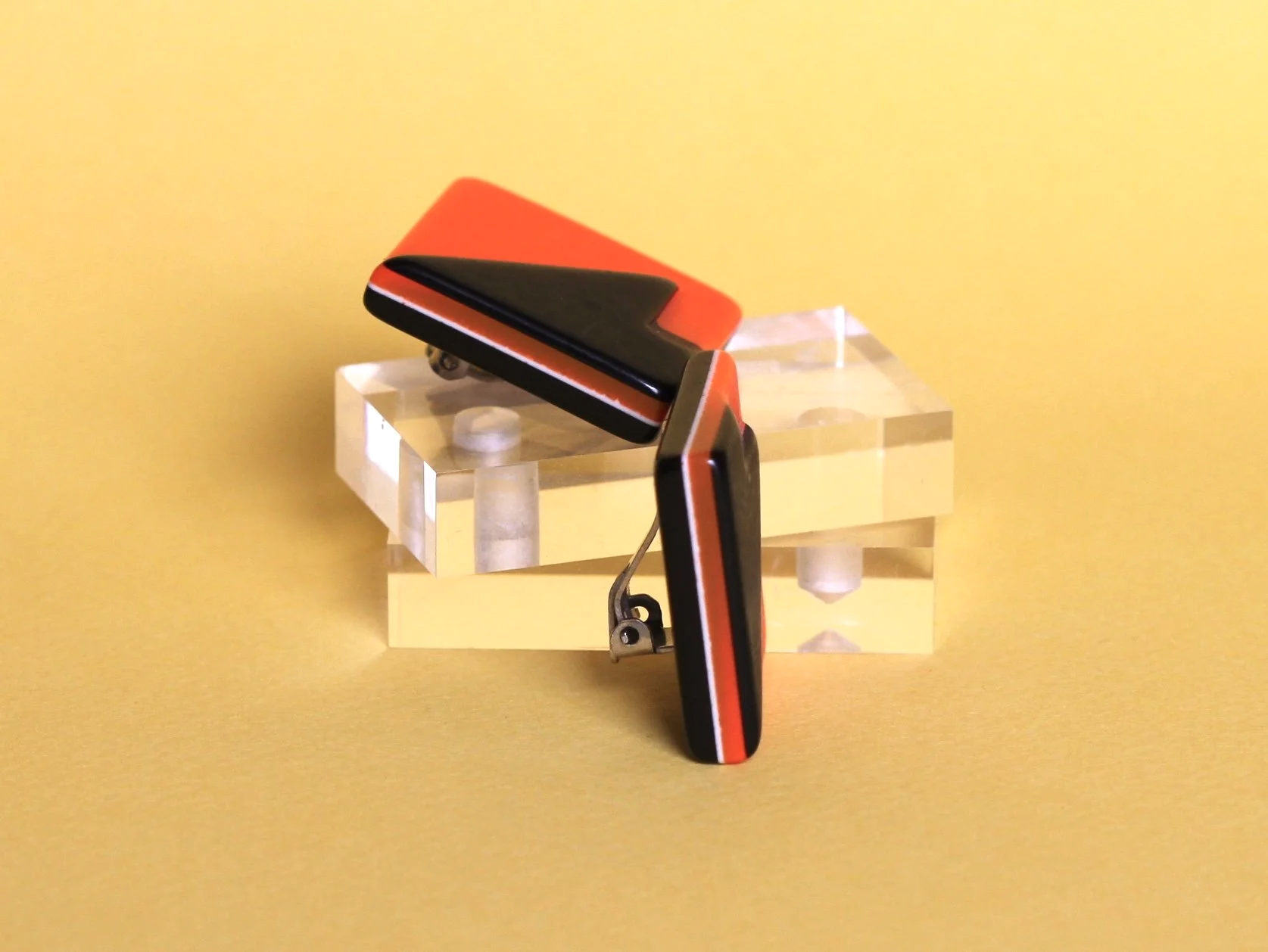 Image 3 of 5
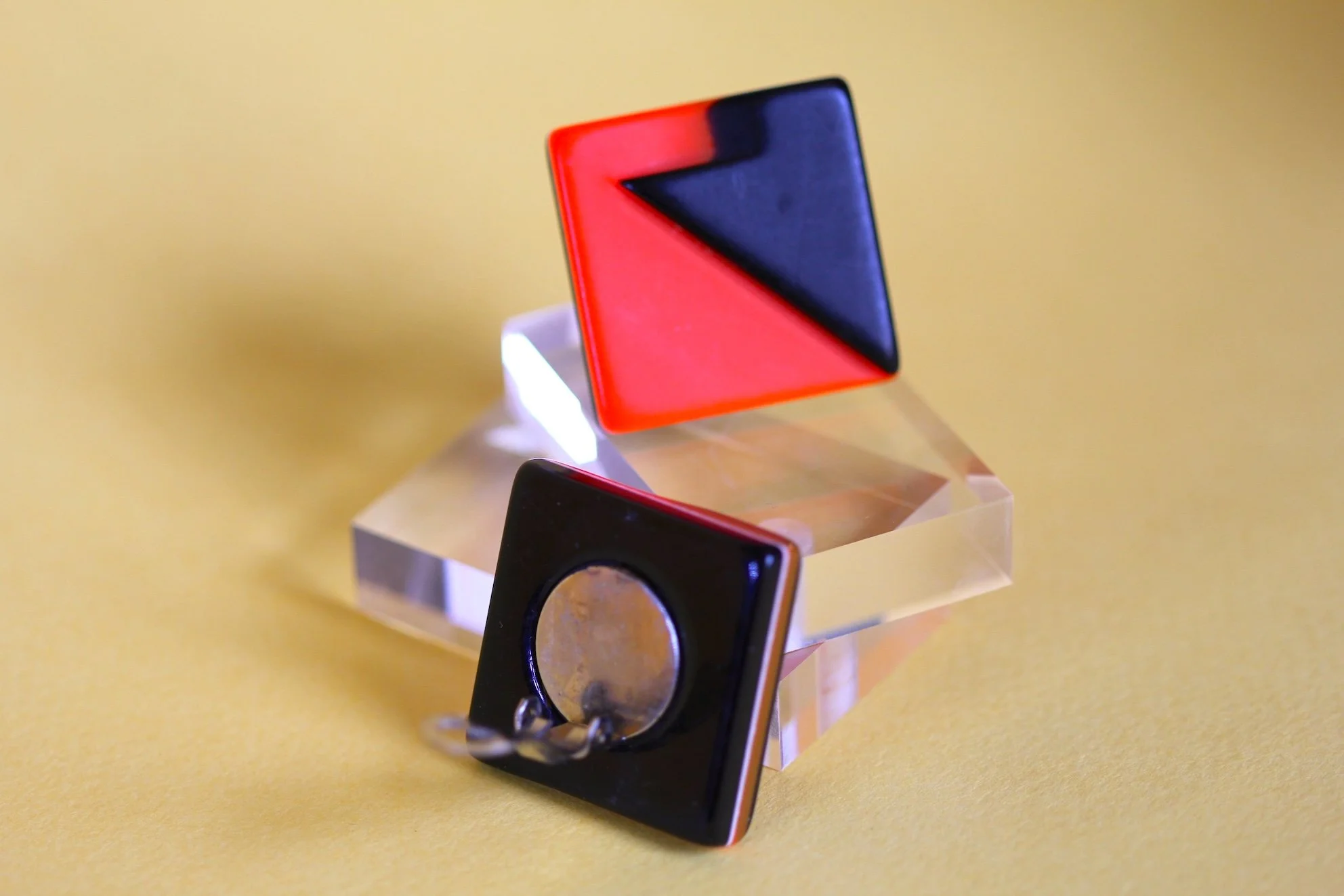 Image 4 of 5
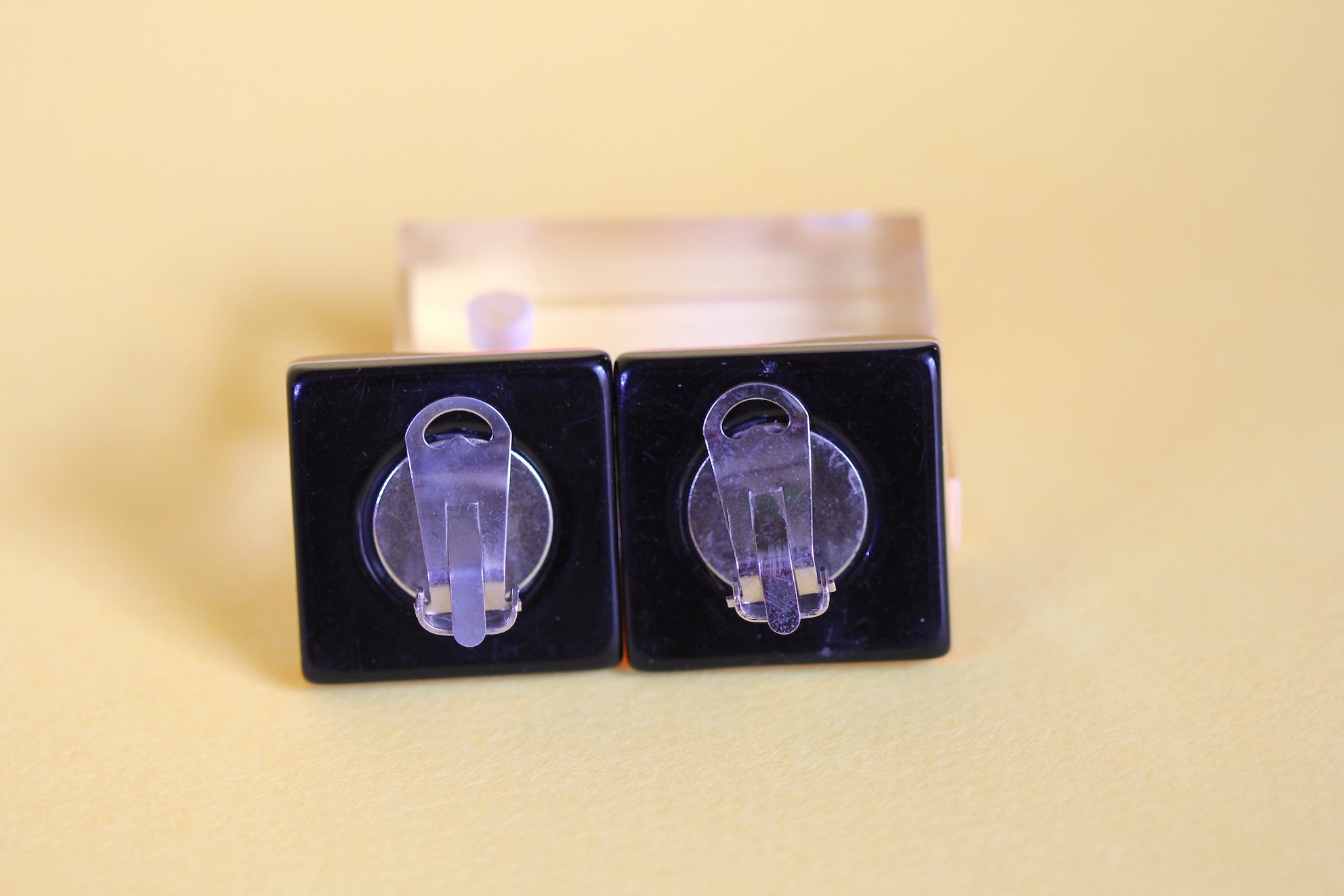 Image 5 of 5
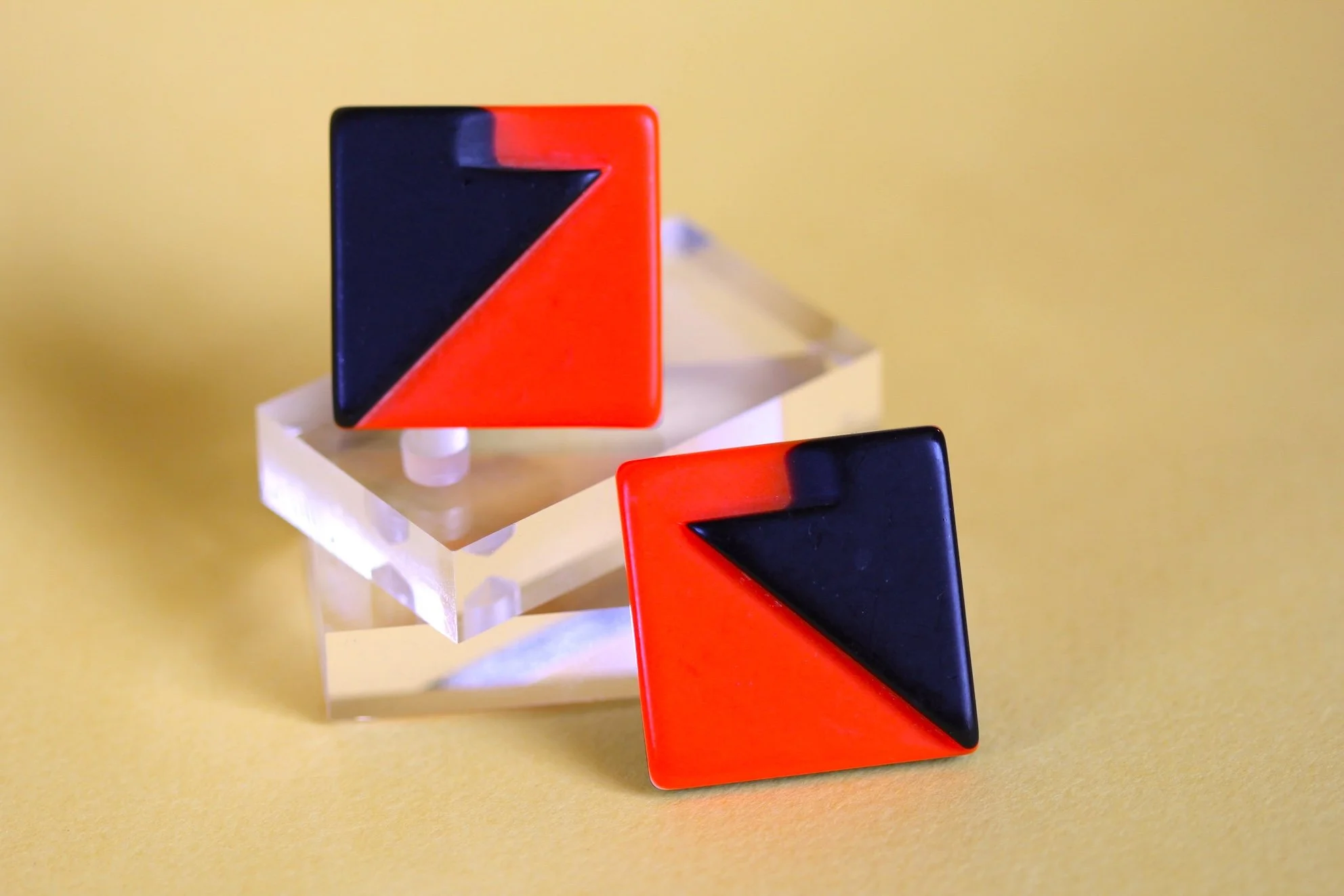
This pair, most likely from her vintage 1969–1981 period, draws on Constructivism: the early 20th-century Russian art movement built on bold geometric shapes, sharp diagonals, and high-contrast colour blocking, originally conceived as a rejection of decorative art in favour of dynamic, architectural form. A fierce diagonal splits each square into fiery red-orange and deep navy, and along the edge you can actually see the layered construction itself – black, white, black, orange – a visible cross-section of the technique that went into making it.
While Léa Stein brooches are typically signed on a V-shaped metal pinback, her earrings and bracelets were very often left unmarked, and are authenticated instead by their construction. These earrings show exactly the features collectors look for: the laminated sandwich edge, and a clip fitting set into a recessed "bed" in the back of the acetate, heat-pressed directly into the plastic – Léa Stein's characteristic earring mounting, distinct from generic clip fittings of the period. Heavy in the hand, beautifully matte, and as graphic today as it would have been in the 1970s.